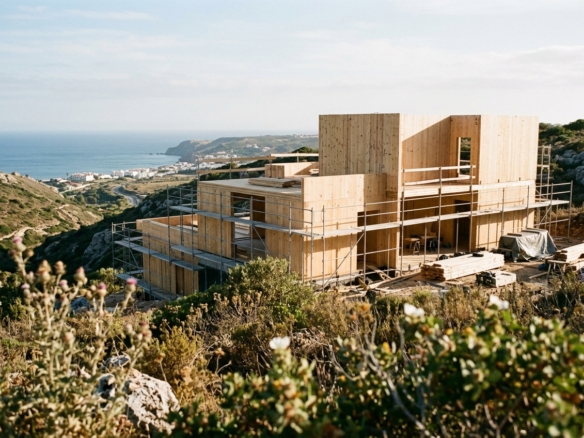


A British couple asked me this last week: if we buy our place in Praia da Luz next spring, are we really going to pay an extra ten thousand euros in tax just because we are not residents? The short answer is yes. Here is exactly how it works, what it costs, and the three legal ways out.
What actually changed
In May 2026 Portugal published its housing fiscal package, the so-called “choque fiscal para a habitação”. It was authorised by Lei n.º 9-A/2026 and put into force by Decreto-Lei n.º 97/2026. Most of it is designed to push property into long-term rental and to get more homes built faster.
The headline most of my clients have heard about, though, is the one aimed straight at them: a flat 7.5% IMT for non-resident buyers. There is a lot more in the package than that single number, and some of it works in your favour, so it is worth understanding the whole picture before you decide when to buy.
What does Portugal’s new 7.5% IMT mean for non-resident buyers in Lagos?
Anyone who is not a Portuguese tax resident pays a flat 7.5% IMT on a residential purchase, charged from the first euro. No progressive brackets, no reductions, no exemptions. It is based on your tax residence, not your nationality, so EU and non-EU buyers are treated exactly the same.
One caveat on timing, because it matters. The law was published on 20 May 2026 and much of the package is dated to 1 September 2026, but the start date for this specific rate is disputed. The certified accountants’ body reads it as already in force since late May 2026, since the non-resident IMT article carries no transitional provision, while other commentators point to 1 September. Until the tax authority settles it, treat the 7.5% as potentially already live and take advice before you time a purchase around any deadline. I have since gone back to the decree and set out where that reading landed in There Is No 1 September Deadline.
Under the old rules, a non-resident buying a holiday home paid the same progressive scale a Portuguese resident pays on a second home, with the lower bands taxed gently. The flat rate removes all of that. The table below compares the old progressive scale with the new flat rate, for a typical holiday-home purchase on the mainland.
| Purchase price | Old progressive scale | New flat 7.5% rate | Extra you pay |
|---|---|---|---|
| €300,000 | €11,606 (3.9%) | €22,500 | +€10,894 |
| €400,000 | €19,300 (4.8%) | €30,000 | +€10,700 |
| €500,000 | €27,300 (5.5%) | €37,500 | +€10,200 |
| €700,000 | €42,000 (6.0%) | €52,500 | +€10,500 |
| €900,000 | €54,000 (6.0%) | €67,500 | +€13,500 |
| €1,100,000 | €66,000 (6.0%) | €82,500 | +€16,500 |
| €1,200,000+ | €90,000 (7.5%) | €90,000 | €0 |
There is a twist worth knowing. Above roughly €1.15m, residents already pay a flat 7.5%, so the new rule changes nothing at the top of the market. The real bite lands in the €300k to €700k band, which is exactly where most of my expat buyers are looking for an apartment or a villa in Lagos, Praia da Luz or Burgau. In that range, budget for roughly €10,000 to €11,000 more than you would have paid last year. If that extra tax bill changes your financing plans, non-resident buyers, including Americans, can typically borrow 60 to 65% of the property value through a Portuguese bank; I cover how non-resident mortgage financing actually works in a separate post.
Every property is different, and the taxable value can sit above the price you actually pay, so the figures above are a guide, not a quote. The quickest way to see your own number is to run your target price through my free cost calculator: it gives you the IMT and your total closing costs in about two minutes.
The three ways out of the 7.5%
The flat rate is not always permanent. The law builds in three situations where you either avoid it or claim the difference back from the tax authority.
The first is residency. If you are already a Portuguese tax resident on the day you buy, or you become one within two years of the purchase, you drop back to the normal progressive rates. For clients buying now and moving over properly within a couple of years, this is the clean route.
The second is long-term rental. If you let the property on a moderate rent, capped at €2,300 a month, sign the lease within six months of buying, and keep it rented for at least 36 months across the first five years, you can reclaim the difference. That suits an investor buyer, less so someone who wants the place free for their own summers.
The third is narrow: holding a Portuguese public role. It will not apply to most readers, but it exists.
The part that actually helps: rental incentives
If you are buying to let rather than for your own use, this package is genuinely generous. Landlord income tax on long-term lets drops from 25% to 10% for rents up to €2,300 a month, locked in through 2029. Units let below that threshold are also exempt from the AIMI wealth tax, and building or renovating a home in that bracket carries 6% VAT instead of 23%.
Stack those together and the maths on a long-term rental in the Western Algarve looks very different from a year ago. It is the clearest signal the government has sent in years: put a home into the long-term market and the tax system rewards you. That is also why the rental route doubles as your escape from the 7.5% IMT.
If you are thinking of selling
There is a new capital gains break here, and it is broader than the old rule. Until now you only escaped IRS on the gain if you rolled the proceeds into a new permanent home.
From 2026 the exemption also covers the sale of a second home or holiday property, not just your main residence, as long as you reinvest the proceeds into a Portuguese property you let long-term at a moderate rent of €2,300 a month or less. The reinvestment window runs from 24 months before the sale to 36 months after, and a partial reinvestment earns a partial exemption.
The catch is what you have to do with the money. To keep the relief you have to become a long-term landlord: the property must stay let at or below €2,300 and rented for the required period, broadly 36 months across the first five years, and the exemption is clawed back with interest if you break the terms or sell early. So it rewards a seller recycling capital into the long-term rental market, not someone cashing out of property altogether. It applies to reinvestment in Portugal only, and non-residents should confirm eligibility with an accountant before relying on it.
My honest take
For Portugal’s housing problem, this package points in a sensible direction. The country’s real issue is too little supply and too much stock pushed into short-term holiday use, and the rental tax cuts plus a faster building process attack both. I would not argue with the diagnosis.
But “good for the market” and “good for a non-resident holiday buyer” are not the same sentence. The 7.5% IMT is presented as an anti-speculation measure, yet mechanically it is a tax on foreign demand, and the people it touches first are exactly the lifestyle buyers I work with every week. Whether it cools prices or just cools this one segment is an open question. The genuine stabilisers in this law are the supply-side pieces, not the surcharge.
So my advice is practical, not political. If you are buying a place for your own use and you are not going to move over or rent it out, the cost is real and you should plan for it, and because the start date is unsettled you should not assume you have until September. Check the current position with a lawyer before you make an offer. If you are buying to let, or moving here properly, the same law hands you a way around it and a better deal than buyers got last year.
Frequently Asked Questions
Does the 7.5% IMT apply to EU citizens too?
Yes. The rule is based on tax residence, not nationality, so an EU buyer who is not a Portuguese tax resident pays the same flat 7.5% as a non-EU buyer. The only people excluded are Portuguese emigrants.
How do I avoid the new 7.5% IMT in Portugal?
There are two realistic routes. Become a Portuguese tax resident within two years of buying and you revert to the normal progressive rates, or let the property long-term at a moderate rent up to €2,300 a month, signed within six months and kept for at least 36 months over five years, and claim the difference back. I walk clients through which one fits their plans before we make an offer.
When does the 7.5% IMT start?
The start date is genuinely disputed. The law was published on 20 May 2026 and the government framed the package around 1 September 2026, but the certified accountants’ body reads this rate as already in force since late May 2026, because the article has no transitional provision. Until the tax authority confirms, assume it may already apply and check the current position before you sign.
Do I pay more IMT on an expensive home in Lagos?
Not necessarily. Above roughly €1.15m, Portuguese residents already pay a flat 7.5%, so a non-resident buying at that level pays the same as everyone else. The surcharge bites hardest between €300k and €700k, the typical holiday-home range.
Can I avoid capital gains tax if I sell and reinvest?
Yes, and from 2026 it is wider than before: it now covers the sale of a second home or holiday property, not just your main residence. The condition is that you reinvest the proceeds into a Portuguese property let long-term at or below €2,300 a month, within the 24-months-before to 36-months-after window, and keep it rented for the required period. The relief is clawed back with interest if you break the terms, so it suits sellers who want to become long-term landlords rather than cash out.
Want to know exactly what your purchase would cost under the new rules? Run your numbers through my free cost calculator and see your IMT and total closing costs in two minutes. Then, if you are weighing a purchase before the September deadline or wondering whether to sell now, book a free 30-minute call with me and we will map out the tax and timing for your situation. Selling? Get a free home valuation in 48 hours.