
The catch has a name: direito de superfície. You own the house, the Câmara owns the land, until 2075. At the end, Portuguese law points to an extension, a buyout or compensation, not to losing your home for nothing. Here’s why it is less scary than it sounds.
The first question every buyer asks me about my new listing in Sargaçal is the same one: “So what happens in 2075?” It is a fair question. It is also the reason this four-bedroom house with a garden and a garage, eight minutes from Lagos, is priced below a two-bedroom apartment in town. Let me explain why I think most buyers are reading it wrong.
What is a direito de superfície?
A direito de superfície (surface right) is the right to own a building on someone else’s land, for a set period. It is defined in the Portuguese Civil Code (articles 1524 onwards) and it is fully registrable: it appears on the Conservatória registry, it can be sold, inherited and mortgaged, and you pay IMI on it like any other home.
If you are British, you already know this structure. It is leasehold. Millions of homes in England and Wales sit on leases, and nobody calls them worthless.
Why the Câmara of Lagos built whole neighbourhoods this way
This is the part most buyers miss. These houses are not a quirk of one seller. They come from a deliberate public housing policy.
Portugal’s 1976 land law (Decreto-Lei 794/76) gave councils a tool to fight speculation: instead of selling municipal land, they could grant it in surface right, so families could build or buy a home without paying for the plot. Lagos used it across the municipality. The Urbanização Municipal do Sargaçal is a 13-lot council development approved in 2001. Bensafrim had municipal self-build lots granted the same way, and so did the Bairro da Liberdade in Espiche.
The whole point was to get local families into their own homes. That matters for what happens later.
So what really happens when the 70 years run out?
There are three realistic scenarios, and none of them is “the council turns up and takes your house.”
1. The term is extended. A surface right can be extended by agreement between the Câmara and the holder. Imagine the alternative: a council repossessing an entire street of family homes it created to house its own residents. No elected Câmara survives that. Some municipal regulations elsewhere in Portugal even extend the term automatically if nobody agrees otherwise.
2. You buy the land. This is not theory. In 2004 the Câmara of Lagos voted unanimously to sell a plot in the Bairro da Liberdade, Espiche, to the person who had held it in surface right since 1997, converting it into full ownership. If owning the ground under your feet helps you sleep, you can ask the Câmara for the same.
3. The land reverts, with compensation. Under article 1538 of the Civil Code, when a time-limited surface right ends, the landowner takes the building, but unless the deed says otherwise, the holder is entitled to compensation for its value. This is the scenario everyone fears, and even here the law does not leave you with nothing. Have your lawyer read that exact clause in the deed.
| Scenario in 2075 | What happens | How likely, in my view |
|---|---|---|
| Extension | The Câmara and the holder agree a new term. You keep the house. | Most likely: these are council estates built to house residents |
| Buy the land | The Câmara sells the plot and the surface right becomes full ownership. | Possible on request: Lagos did it in Espiche in 2004 |
| Reversion | Land and house return to the Câmara, with compensation for the building unless the deed excludes it (Civil Code art. 1538). | Least likely: politically very hard for a Câmara |
My honest read, after looking at how these neighbourhoods came to exist: extension is by far the most likely outcome, and a buyout is the option if you want certainty.
What happens to a surface right if the owner dies?
It passes to the heirs, like any other home. Article 1534 of the Civil Code says it in one line: the surface right is transmissible “por acto entre vivos ou por morte”, during your lifetime or on death. Your children inherit the house and the years left on the term, and they can keep it, rent it within the deed’s conditions, or sell it.
Inheritance tax follows the normal Portuguese rules too: spouses, unmarried partners, children and parents are exempt from the 10% stamp duty on inheritance. As with everything here, have your lawyer check the deed for any municipal conditions on transfers.
Why these houses almost never come up for sale
Think about what these families were offered: the chance to build or buy a home on land the Câmara provided, without paying market price for the plot. In Lagos, where the land is often the most expensive part of a house, that is a once-in-a-lifetime deal. People who got one hold on to it. In 25 years of real estate, I have rarely seen anyone hand back an advantage like that.
And there were never many to go round. The Câmara only did this in a handful of places, Sargaçal, Bensafrim and Espiche among them, and the Sargaçal development has only 13 houses. Lagos has been short of affordable housing for years, so there has never been enough for everyone who wanted one. On top of that, the deeds barred a sale for the first 20 years without the Câmara’s authorisation. Most of these houses have simply never been on the open market.
So when one does come up, it deserves a proper explanation, not to be dismissed because of two words on the registry.
The rest of the world does this every day
Outside Portugal, nobody blinks at this. In the UK, the Leasehold and Freehold Reform Act 2024 lets owners extend their lease to 990 years. In Hong Kong, the government extended thousands of land leases in one stroke in the run-up to the 1997 handover, rather than reclaim them. Across much of Asia, owning a building on state land is simply how property works.
In Lagos it is unusual, and unusual makes buyers nervous. Nervous buyers create opportunities for the ones who do their homework.
What it means for this house in Sargaçal: risk or opportunity?
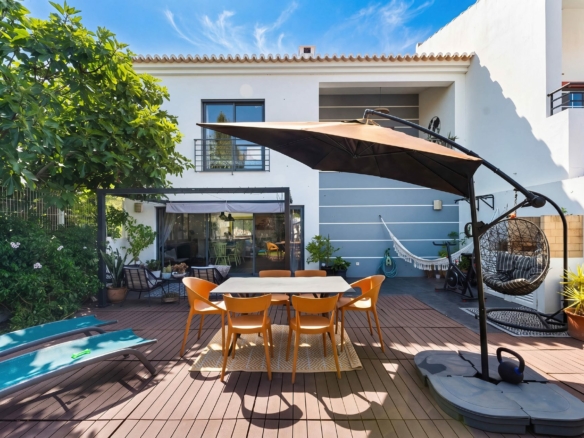
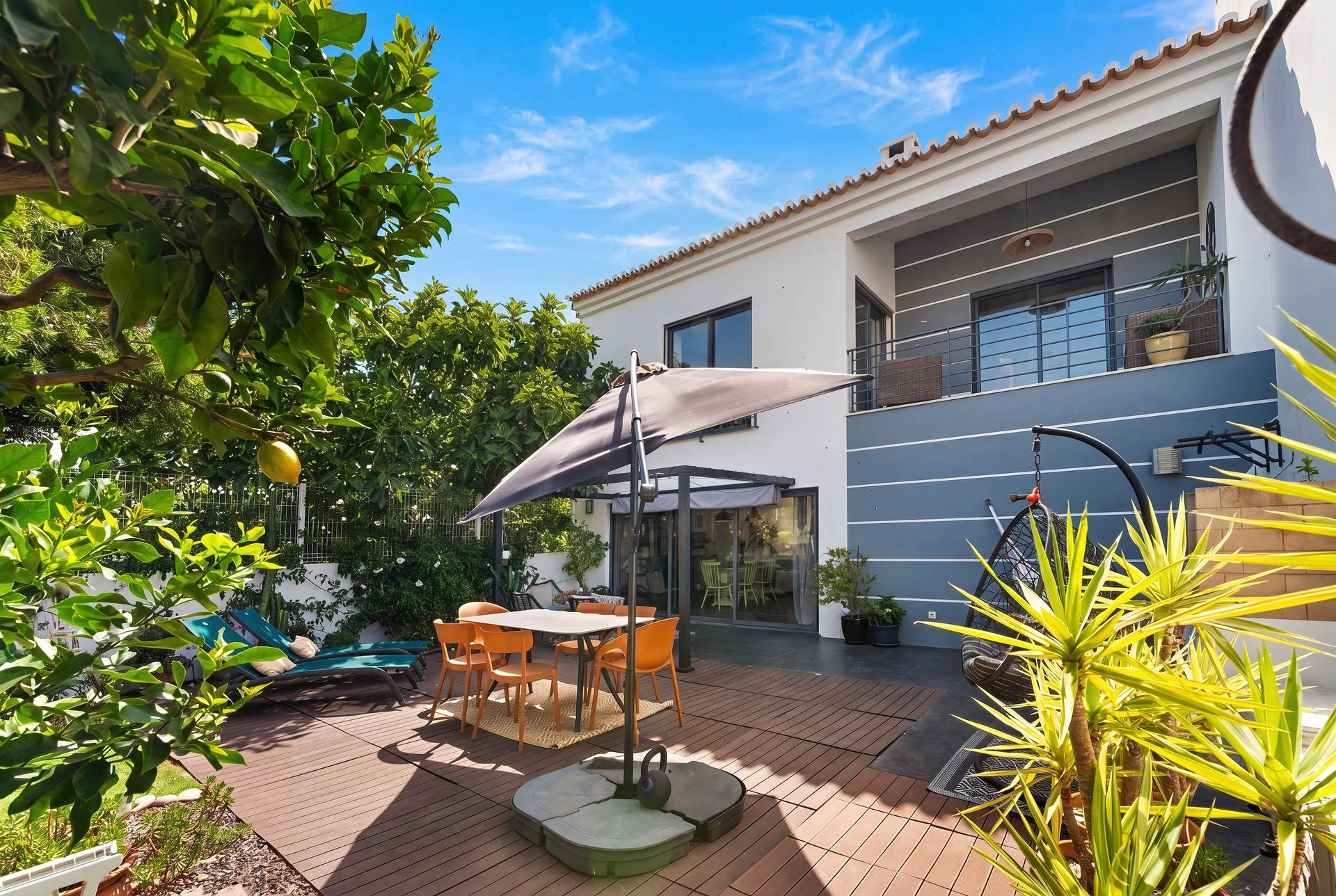
Here is what the surface right buys you at €499,000:
- 4 bedrooms, 3 bathrooms, main bedroom en suite
- 150 m² of living space plus a closed garage, on a 196 m² plot with a private garden
- Built in 2009, kitchen and bathrooms renovated in 2021, air conditioning in every bedroom since 2023
- Energy certificate B, with solar panels for the hot water
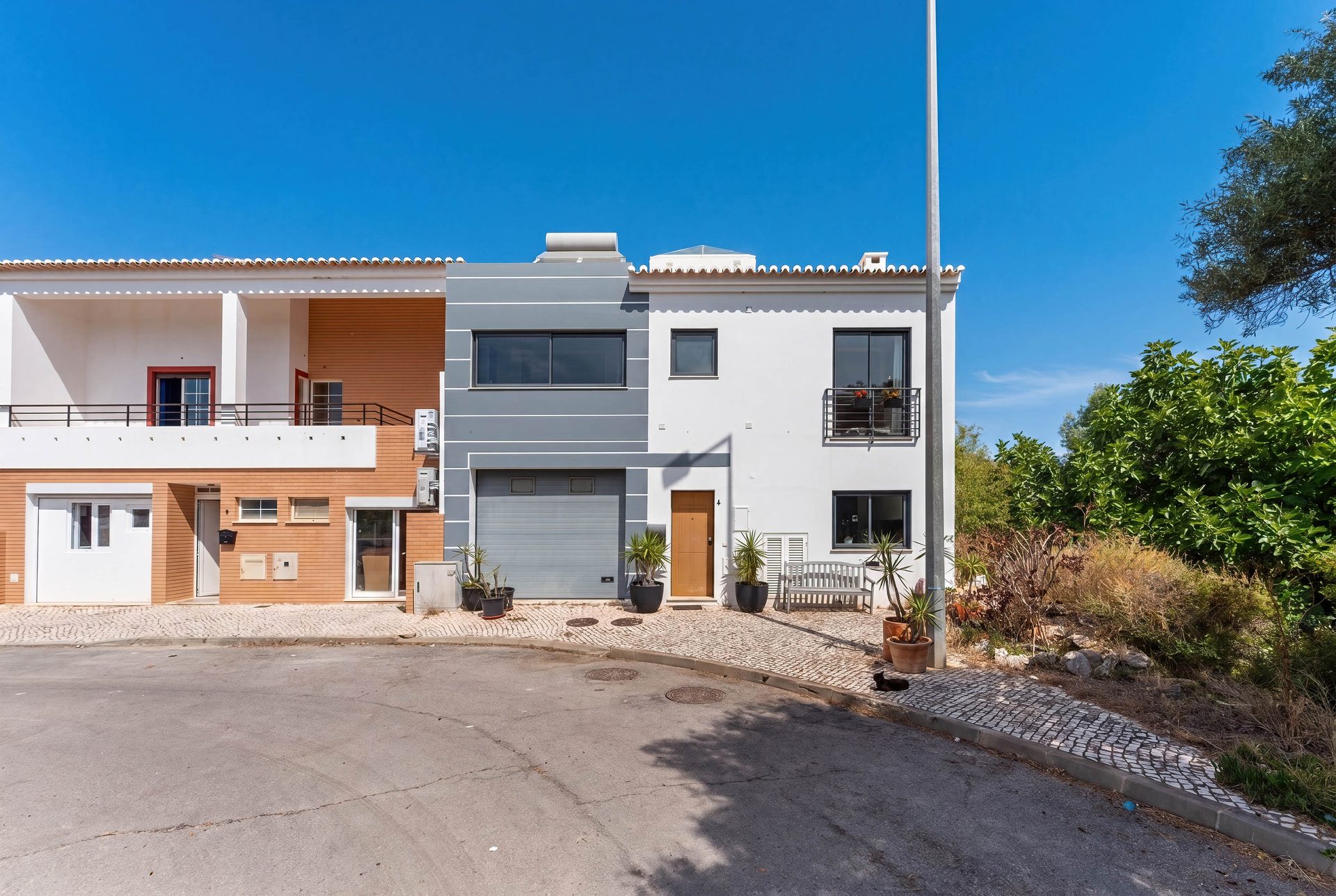
- End house of a quiet cul-de-sac, 8 minutes to Lagos, 10 minutes to Meia Praia and Praia da Luz
- Surface right granted in September 2005, running to September 2075: 49 years left
So, risk or opportunity? The risk is real but narrow: a fixed term on the land, a smaller pool of lenders, and a deed your lawyer needs to read carefully. All three are known, documented and checkable before you sign anything.
The opportunity is much harder to find. Two-bedroom apartments in central Lagos are currently listed between €560,000 and €590,000. For less, this house gives you four bedrooms, a private garden and a garage, in a council development where homes almost never change hands. Families who get one of these keep it, so the next chance to buy here may not come for years.
That is why I see this house as one of the rarest opportunities on the Lagos market right now, not a risk to avoid.
The full documentation, including the Câmara’s written explanation of the terms, is ready for your lawyer before you even book a viewing. See the 4-bed Sargaçal house with garden and garage.
Own a home around Lagos yourself? See what your home is worth today with the SunnySteve estimate.
Frequently Asked Questions
Is it safe to buy a house with a direito de superfície in Portugal?
Yes, provided your lawyer checks the deed. A surface right is a registered property right that can be sold, inherited and mortgaged. The points to check are the end date, the extension terms and the compensation clause.
Can I get a mortgage on a surface right property?
Yes. Portuguese banks do lend against surface rights, and I have seen bank mortgages registered on homes held this way. Expect fewer lenders to play and possibly a lower loan to value, so speak to a broker early.
Can I buy the land from the Câmara of Lagos?
It is possible. The Câmara of Lagos has already sold municipal land to surface right holders and converted it to full ownership, as it did in Espiche in 2004. Price and conditions are decided case by case, so ask the Câmara in writing.
Can I sell a surface right house later?
Yes. The Câmara normally keeps a right of first refusal on resale and the deed can set conditions, which is why I get the Câmara’s position in writing before a sale. Your future buyer gets exactly the same right you have, for the years remaining.
Can my children inherit a direito de superfície?
Yes. Article 1534 of the Civil Code makes the surface right transmissible on death, so your heirs inherit the house and the remaining years of the term. Spouses, children and parents are exempt from the 10% inheritance stamp duty, exactly as with a freehold home.
Thinking about Sargaçal or another home around Lagos? Tell me what you are looking for and I will send you the full surface right pack.
I am an estate agent, not a lawyer. This article explains how surface rights work in general. Every deed is different, so have an independent Portuguese lawyer review the documents before you commit.