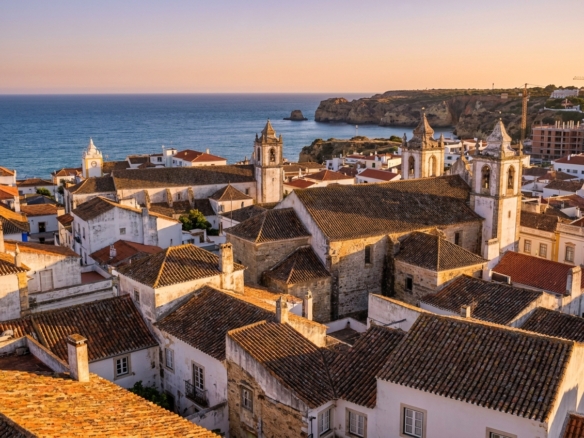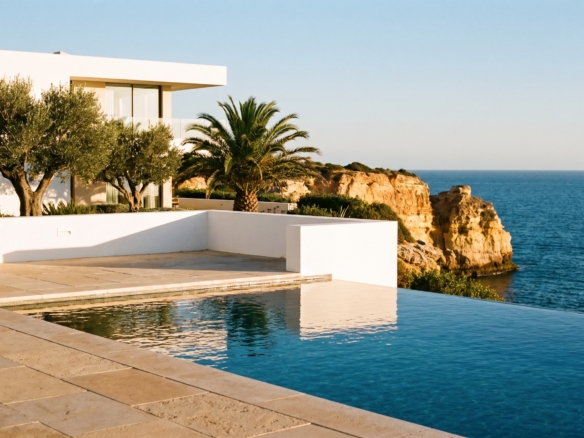

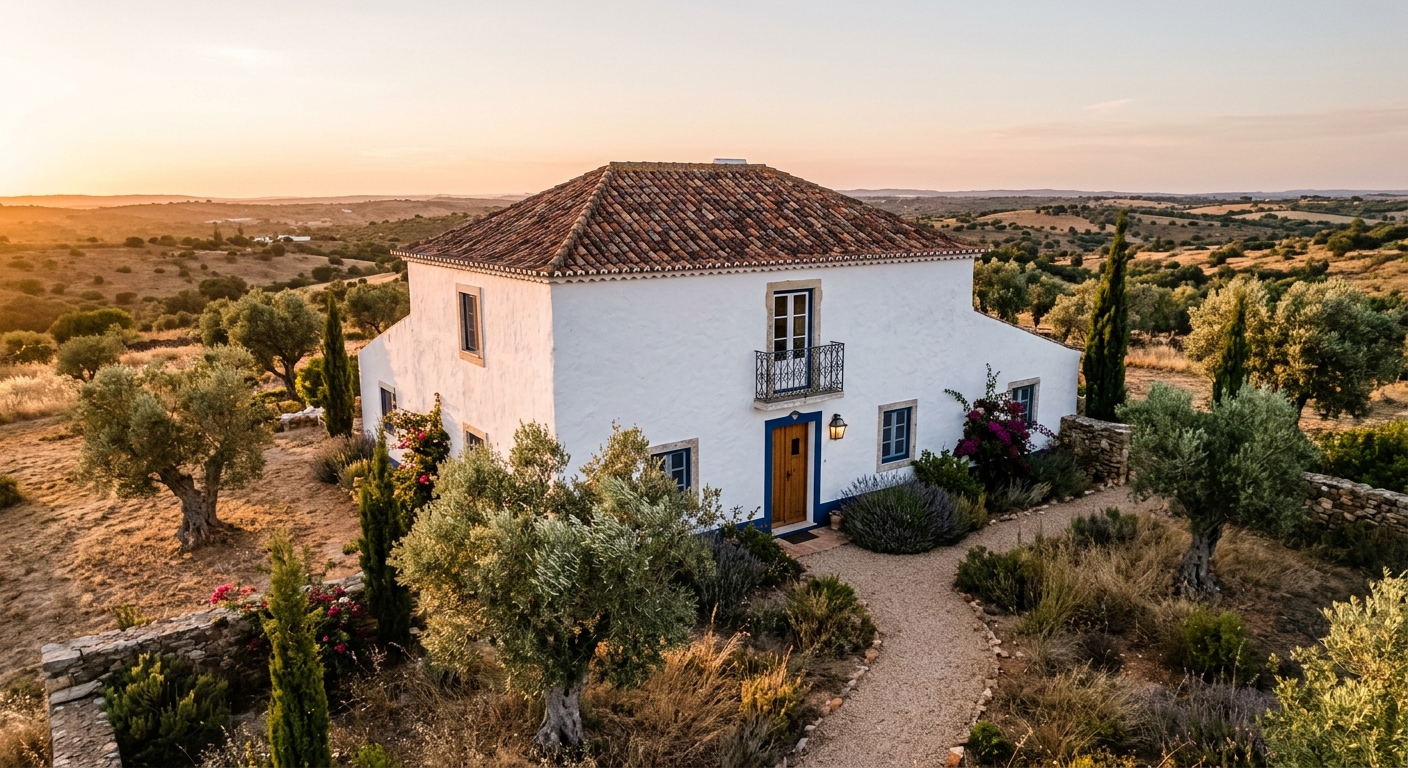
A Dutch couple I worked with last month walked away from a villa in the hills above Praia da Luz. Asking price: 1.15 million euros. Listed for fourteen months. Beautiful sea view, tired finishings, no proper insulation, single-glazed windows in half the house. They didn’t negotiate. They thanked the seller’s agent, got back in the car, and asked me to find them something where 1.15 million actually buys what 1.15 million should buy.
That conversation, almost word for word, is one I have most weeks now.
The market shifted. Buyer behaviour shifted more.
The headline data from Q1 2026 looks fine on paper. Across Portugal, prices rose by around 18% year on year. The Algarve is still attracting the lion’s share of foreign-buyer money, and Lagos has seen its own steady appreciation. I covered the numbers in detail in Are Algarve Prices Still Climbing in Q1 2026? and the short answer was yes, they are.
But transactions across Portugal were down 9.4% in Q1. That’s the data point that matters for anyone trying to actually sell a property right now. Prices on listings haven’t fallen. The velocity has. Properties that would have moved in eight weeks last year are sitting for eight months now. And the ones that have been sitting for over a year are sitting because they’re priced for a market that no longer exists.
This is not me predicting a crash. The Western Algarve fundamentals are strong, foreign demand is intact, and well-priced quality homes still sell quickly, especially now that the region is being named among Portugal’s top luxury markets. What’s changed is the buyer.
What buyers actually compare in 2026
Five years ago, an expat buyer from Amsterdam or London or Munich walked into a Lagos viewing with limited reference points. They were buying lifestyle, they trusted the agent, and they often paid close to asking.
Today’s buyer arrives with a phone full of data. They’ve already pulled twenty comparable villas across the Algarve, the Costa Brava, Puglia, Mallorca, and the Cyclades. They’ve asked an AI assistant to compare cost per square metre, energy ratings, and renovation costs across three countries. They know what a 1.1 million-euro budget actually buys in Spain or southern Italy. They know what 1.1 million-euro buys in Lagos at decent spec, and they know what it buys at overpriced spec, because the gap is now obvious within five minutes of scrolling.
The lifestyle premium for the Algarve is real. It’s also finite. When the price of an Algarve villa stops being defensible against equivalent properties in countries with comparable weather and lifestyle, smart buyers walk. They don’t argue. They don’t lowball. They just leave.
Quality is now the non-negotiable
Here’s what surprised me most about the last twelve months. Buyers in the 700k to 1.5 million-euro band are no longer willing to compromise on build quality. The view-and-vibes era is over at this price point.
They want proper thermal insulation. They want double or triple glazing. They want kitchens and bathrooms that won’t need a 60,000-euro refit in year two. They want a working HVAC system, decent ventilation, and an EPC rating that won’t be a liability when they eventually resell. Many of them have lived in Northern European apartments with proper building standards, and they’re not going to accept worse for more money just because the postcode is sunnier.
This is the disconnect that keeps homes on the market for over a year. A villa priced at 1.2 million euros with single-glazed windows, no insulation, and a kitchen from 2003 is not a 1.2 million-euro home in this market. It might have been in 2022. It isn’t now.
For sellers: the listing has been talking to you
If a property has been actively listed for more than nine months without a serious offer, the market is telling you something specific. It is not telling you to wait. It is telling you the price doesn’t match what you actually have.
Realistic pricing in 2026 doesn’t mean cheap. It means priced for the real condition, the real finishings, the real energy performance, and the real comparable transactions in your micro-area, not the optimistic comparables your neighbour listed at last year and quietly withdrew. The single most expensive mistake a seller can make right now is launching 10 to 15% above the defensible number and then chasing the market down with reluctant 25,000-euro reductions every six months. Every drop signals weakness. Every month on the market adds another reason for a buyer to assume something is wrong.
The sellers I see winning right now are the ones who priced honestly from day one, took the early offers seriously, and accepted that the buyer who walked in week three was probably the best buyer they were going to get.
What this means if you’re thinking about selling
If you’re considering listing in Lagos or anywhere in the Western Algarve in 2026, the smartest thing you can do is get a clear, unflattering, data-backed view of what your home is actually worth today. Not what you’d like it to be worth. Not what the agent who promises the highest number tells you to win the listing.
I’d rather lose a listing telling a seller the truth than win it pretending the 2022 market is coming back. The buyers I work with on the other side of every deal are too informed for that to work anyway.
Request a free, honest valuation of your property and we’ll have a conversation about what the market is realistically prepared to pay, what would move it, and whether now is even the right time for you to be selling.
And if you’re a buyer reading this, the message is simpler. Trust your gut. If a property feels overpriced, it probably is. There’s no shortage of well-priced quality in this market once you know where to look.
Keep Reading
A few things worth a look if any of the above hit a nerve: